
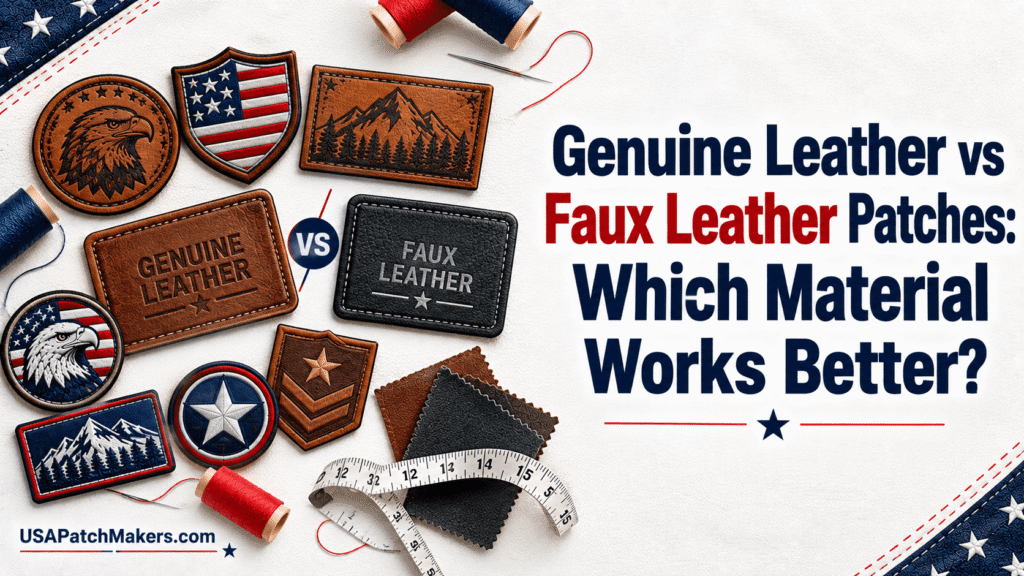
You can make a selection between genuine leather vs faux leather patches depending on your budget, durability requirements, and your brand presentation. Despite both genuine leather and faux leather patches looking great on your hats, jackets, and bags, they perform differently. However, this guide is about the detailed comparison between genuine leather vs faux leather patches, so keep reading.
What Are Genuine Leather Patches?
Genuine leather patches are made using real animal hide; patch makers usually prefer cowhide, treated and finished to create a durable, premium material for branding. With nice textures and patterns forming in real leather, you get a slightly better finish with these patches. Especially for an authentic and one-of-a-kind look, genuine leather patches stand out. No matter how long you use genuine leather patches, they develop a patina, adding character to what you wear.
Key Characteristics:
- Natural grain and texture, unique to each patch
- Ages well, developing character over time
- More durable than faux leather patches and last longer.
- Premium, authentic appearance
What Are Faux Leather Patches?
Faux leather patches, on the other hand, are made of synthetic alternatives, and patch makers use polyurethane (PU) or PVC in their production. Comparison of genuine leather vs faux leather patches becomes easy when you know the clear differences. They are not sourced from hide; instead, they are entirely manufactured but give consistent colors and textures. People who prefer uniformity in their designs should choose faux leather patches, especially for large productions.
Key Characteristics:
- Uniform color, texture, and finish across every patch
- Faux leather patches give you affordability for bulk orders.
- Vegan-friendly and animal-free
- More resistant to moisture than untreated genuine leather
Genuine Leather vs Faux Leather: Key Differences
Making the comparison between genuine leather and faux leather patches easier with this brief table:
| Factor | Genuine Leather | Faux Leather |
| Durability | Very high, improves with age | Moderate, may crack over time |
| Appearance | Natural, varied grain | Uniform, consistent finish |
| Cost | Higher | More budget-friendly |
| Weight | Slightly heavier | Lighter |
| Moisture resistance | Requires conditioning | More water-resistant |
| Vegan-friendly | No | Yes |
Faux vs Genuine Leather: Durability and Longevity
In comparison of genuine leather vs. faux leather patch durability, real leather is clearly more durable, especially for long-term usage. Mostly for heavy items, you can rely on genuine leather patches to deal with regularly wear and harsh weather conditions.
Faux leather patches hold up pretty well if you take care of them from time to time under normal conditions, but they’re more prone to cracking or peeling after long-term use. If your patches dont suffer from heavy wear or you’re using them for fashion accents, then you can rely on faux leather material.
Material Composition: What Each Patch Is Actually Made Of
In order to understand the material composition of both genuine leather vs. faux leather patches, you need to look at a few things. Genuine leather is usually made from tanned and finished animal hide, mostly cowhide. That’s why the tanning process treats the material for a long time and provides better strength, preserving its natural grain and texture.
Faux leather patches are entirely made of synthetic layers of polyurethane or PVC bonded to a fabric backing. Patch makers deliver consistent quality and appearance across bulk orders when you choose faux leather patches; there is no natural material variation to account for.
Best Uses for Each Material
You can have a better idea once you know the best uses of both genuine leather vs faux leather patches:
When Genuine Leather Works Better
- Premium denim branding and heritage apparel
- Workwear and jackets that need to withstand heavy daily use
- Luxury or artisanal products where authenticity matters
- Long-term outdoor gear that benefits from leather’s aging process
When Faux Leather Works Better
- Budget-conscious branding and promotional merchandise
- Bulk orders where consistent appearance across every piece matters
- Vegan or animal-free product lines
- Mostly preferable choice for fashion apparel, perfect fit for trend changes and clothing lineups.
How Each Type Is Applied: Genuine Leather vs Faux Leather Patches
Both genuine leather and faux leather patches work better when you apply them using sewing instead of ironing. Sewing these types of leather patches is the safest option instead of adhesive alone to deal with regular washing and wear.
- Genuine leather should never be ironed on, since the heat required can scorch, dry out, or crack the material. Sewing or riveting are the standard methods, with rivets especially common for denim branding.
- Faux leather can sometimes use a heat-activated backing, but this requires low, careful heat, since PU and PVC materials can warp under excessive temperature. Sewing remains the more durable option for both materials.
Cost Comparison: Faux Leather vs Genuine Leather
You can buy faux leather patches when you need low prices, since synthetic materials do not cost as much and save money for bulk orders. Meanwhile, genuine leather patches do cost more than faux leather, but they are worth purchasing when you like durability and longevity. You can get a special discount by ordering a large quantity of real leather patches. However, the final cost of custom leather patches depends on:
- Patch size and thickness
- Customization method (engraving, embossing, or laser etching)
- Order quantity
- Backing and stitching complexity
Final Thoughts
The choice between genuine leather vs faux leather patches depends entirely on how much you are willing to spend, durability demand, and brand positioning. For premium and long-term application, you should choose genuine leather patches. However, faux leather patches stand out when you are using them for temporary purpose of fashion styles. Get a “Free Quote” on any custom patches you need in the United States through USAPatchMakers.com.
Frequently Asked Questions
Genuine leather vs faux leather patches: which one is more durable for patches?
Genuine leather patches provide more strength, especially when you wear them under hard conditions, bad weather, and daily wear. While faux leather patches crack or peel after external use, especially under direct heat.
Can genuine leather patches be ironed on?
No. Heat can scorch or dry out real leather, so sewing or riveting is the recommended attachment method.
Which is more budget-friendly, faux or genuine leather patches?
Faux leather patches are typically more affordable, since synthetic materials cost less to produce and scale more easily for bulk orders.