
Stop scrolling for how to apply iron on patches to your clothes and read our detailed guide. You can hide fabric holes and upgrade your boring jackets or hats using iron-on patches. But you need proper temperature, the right amount of heat and a clean surface for a perfect iron-on patch finish. Discover how to iron on patches on different clothes like denim, cotton, or twill bases for the right results.
A Quick Way to Upgrade Any Garment
Despite iron-on patches being a temporary solution to apply patches to the fabric, it’s quick and looks clean. Most common uses of iron on patches include
- Quick installation using a household iron
- Strong heat-activated adhesive bonding
- Clean and professional appearance
- Ideal for jackets, jeans, uniforms, and bags
- Affordable customization for brands and individuals
How to Identify an Iron-On Patch
Before we talk about how to iron on a patch, let’s discover what they are and how they work. Basically, iron-on patches are fabric-based patches made with cotton, woven or any other material with adhesive backing. The adhesive inside them activates at a certain amount of heat exposure. Then, eventually, they attach to the fabric, making a perfect bond with the fabric.
Likewise, you can confirm if the patch is iron-on or not just by following these key signs:
- Look at the back of the patch.
The iron-on patches come with a glossy or slightly plastic-like coating, which gives them a unique finish.
- Feel the texture
Comparing iron-on patches with normal patches feels rubber-like or has a firm finish because of the adhesive.
- Check under the light.
Find the real iron-on patch by putting light on it; its backing shines due to heat-activated adhesive.
Prepare Your Fabric Before Applying a Patch
The first thing you need to do before learning how to apply iron to patches is to make your clothes ready. Only a clean surface can help the adhesive make a strong bond with the fibers. That’s why follow these tips to prepare the surface for iron-on badges:
Wash and dry the Cloth.
Get rid of tiny dirt particles, remove oil or detergents, because they can mess with the adhesive.
Smooth the fabric
First of all, iron the jacket, shirt, hoodie or hat surface to make sure the patch perfectly aligns on the right spot.
Choose suitable materials
Now comes choosing the different types of material in which iron-on patches are made:
- Cotton shirts and hoodies
- Denim jeans and jackets
- Canvas bags
- Heavy workwear fabrics
Pro Tip: Never apply too much heat when you are using an iron on polyester or synthetic mix fabrics.
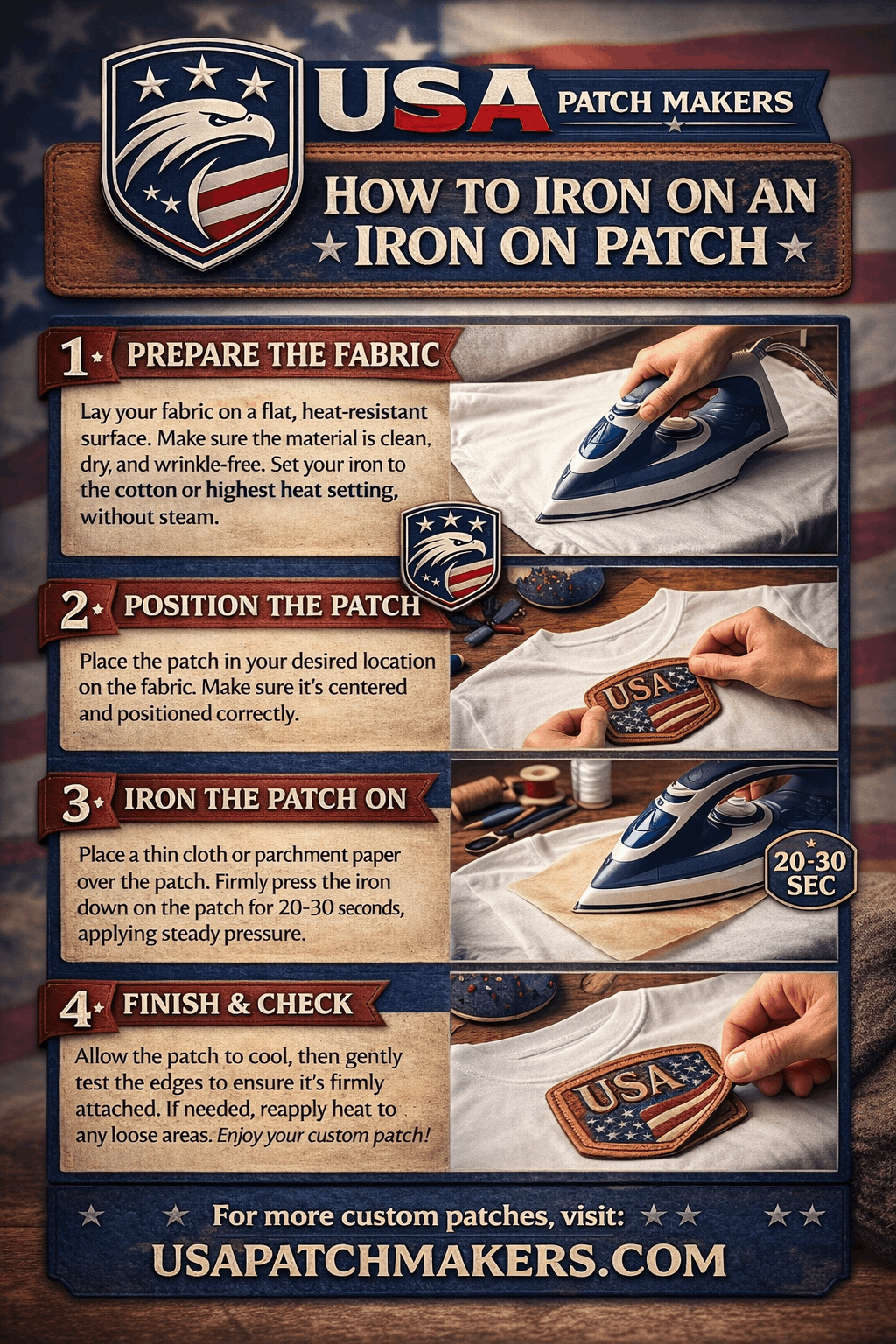
Step-by-Step Guide: How to Iron On Patches
If you are wondering how to iron a patch without damaging it, then follow these steps:
- Set the Correct Iron Temperature
Turn off the steam feature in your irons, then set the temperature to the medium to high range, around 350°F.
- Position the Patch
Carefully align the iron on patches onto your clothes and choose the right spot before you turn the iron on:
- Jacket sleeves or chest
- Jeans thighs or knees
- Back panels of jackets
- Backpack pockets
- Shirt pockets or collars
Expert Tips: Make sure the backing of the iron-on patches is clean, and the fabric’s surface is flat.
- Protect the Patch Surface
You can put some cloth or a towel over the iron on patch to protect it from direct heat.
- Apply Firm Pressure
Then press the iron on the patches on the fabric for about 20 to 25 seconds, depending on the temperature.
- Heat the Back of the Fabric
After ironing the patch on the fabric, now turn them inside out and put the iron on the back of the patches. Apply consistent pressure for about 10 to 15 seconds to make sure the adhesive perfectly bonds with the fabric.
- Allow the Patch to Cool
Lastly, before you wear your jacket, shirt, or hoodie, let the iron-on patch cool down because the adhesive makes a strong attachment with the fabric upon cooling.
Where Iron On Patches Work Best
Iron-on patches have great use in various types of fabrics and are perfect for quick application. Meanwhile, the common uses of iron on badges include:
Common uses include:
- Hoodies and sweatshirts
- Denim jackets and jeans
- Work uniforms
- Tote bags and backpacks
- Hats and vests
Pro Tip: If you want durable results with iron on badges, use them on denim or cotton clothes.
How to Apply Iron-On Patches Without an Iron?
In case you cannot find any iron in your house or office, you can use alternatives to apply the iron to patches. The common alternatives for applying iron to patches in the absence of iron are:
- Hair straightener
- Heat press machine
- Clothing press
- Cricut EasyPress
Avoid steamers because moisture weakens the adhesive layer.
Tips for Long-Lasting Patch Adhesion
Prevent minor issues while applying iron on patches on clothes by following these expert tips:
- Always use firm pressure during application
- Avoid steam when heating the patch
- Let the patch cool fully before wearing
- Wash garments in cold water when possible
- Air-dry instead of using high-heat dryers
Keep your iron-on patches secure for a long time and make them stick better with this method.
Final Thoughts
Get a quick application with iron on patches, and they are reliable for a short period of time. If you take care of them properly, they can last upto 2 to 3 years easily. But you need to be extra careful while washing them, don’t use cheap chemicals or detergents, and never apply direct heat to dry iron-on patches because iron-on patches have a special adhesive in them, which can reactivate on heating.
Buy High-Quality Personalized Iron On Patches in All the States of the United States!
Visit USAPatchMakers.com and choose the right type of material, such as embroidered, woven, or chenille patches.
FAQs
How hot should an iron be for iron on patches?
Make sure the iron is not too hot and don’t apply direct heat to the patch; use a cloth to cover the patch. Meanwhile, the ideal temperature you should set your iron to is about 350°F.
Can iron on patches stay attached after washing clothes?
Yes, iron-on patches last longer if you avoid using bad detergents and let them air dry after washing.
Is it possible to attach iron-on patches without sewing?
Yes, you can put iron-on patches with heat-activated adhesive in them to stick to the fabric. You don’t need to stitch the iron-on patches.
Can I sew on iron-on patches?
Yes, you can also sew on the iron-on patches after applying them to the clothes using an iron. Experts recommend stitching the borders of iron-on patches to give them extra longevity.